
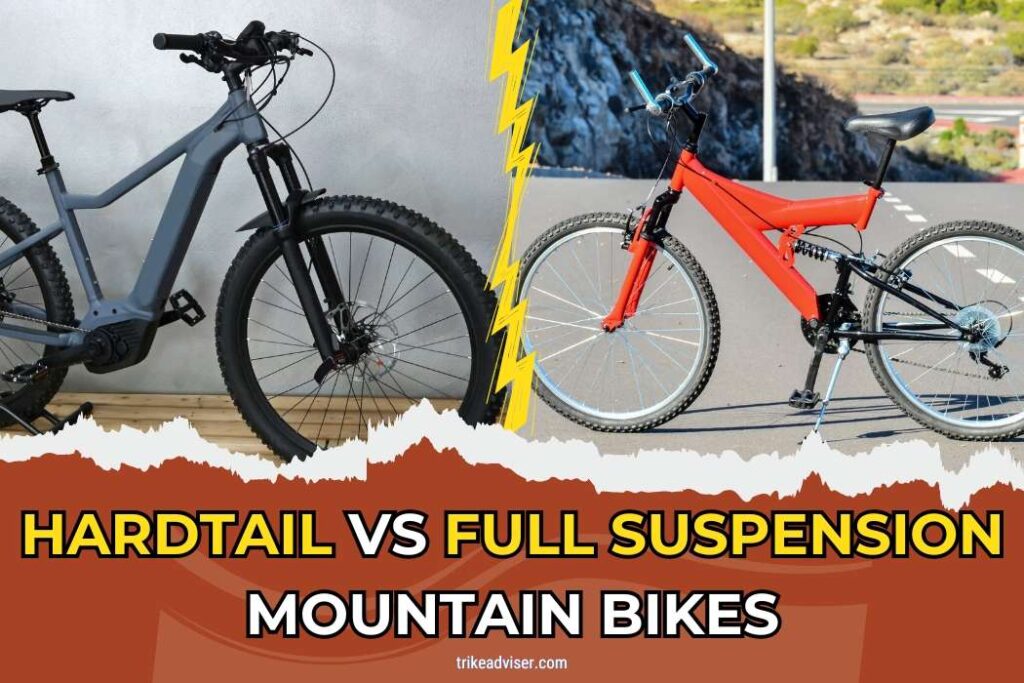

It’s the classic mountain bicycle predicament, isn’t it? You’re prepared to hit the trails, but which bicycle takes you there? Hardtail? Full suspension? The debate is as rugged as the trails themselves.
Choosing the right mountain bike can feel like navigating a rocky path. Here’s how to simplify it. Do you crave simplicity and lower maintenance costs? Or do you yearn for comfort on those back-breaking trails? Your terrain of choice and riding style are screaming for attention in this decision.
If your trails are littered with roots and rocks, maybe it’s time to think about that full suspension. But if speed and efficiency call your name, perhaps a hardtail awaits.
Hardtail vs Full Suspension Mountain Bikes
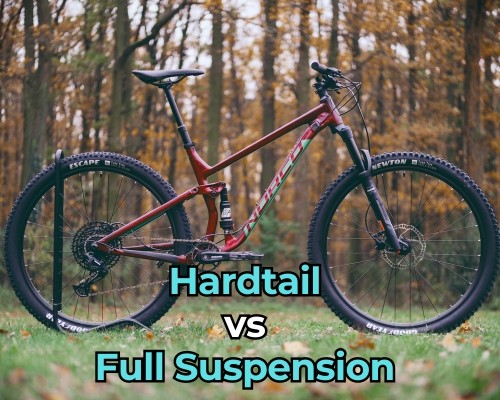
Hardtail Mountain Bikes: The Uncomplicated Speedsters
Simplicity in Design
Hardtail Mountain bikes epitomize simplicity. With no rear suspension, these bikes feature a straightforward build, translating to less maintenance hassle and lower repair costs.
It’s a bit like packing a duffle for a weekend getaway—you bring only what you need, nothing more, making it lighter and easier to handle.
Cost-Effective Choice
Price-wise, hardtails are the clear winners. Typically ranging from $500 to $1,200 for entry to mid-level models, they’re accessible to newcomers and budget-conscious riders.
This affordability extends to upkeep, much like opting for a manual car over an automatic—it’s just less costly in the long run.
Performance on Trails
On well-trodden paths or during uphill climbs, hardtails excel. Their rigid rear end offers unmatched power transfer between the pedal stroke and the ground. Imagine sprinting on a track in lightweight running shoes—that’s a hardtail on a climb.
Full Suspension Mountain Bikes: Comfort on Rough Terrains
Enhanced Comfort
Full suspension bikes are the SUVs of the mountain biking world—built to handle rough, uneven ground with ease.
Equipped with dual suspension systems, they absorb the jolts from rocks and roots that would typically rattle a hardtail rider. This means less fatigue and more comfort on longer, tougher rides.
Superior Control
The stability and traction offered by full-suspension bikes on downhill and technical trails are unparalleled.
It’s like having an advanced traction control system in your car; no matter the road condition, you have consistent control, giving you the confidence to push your limits.
Higher Initial Investment
These bicycles are a venture, with costs ordinarily beginning around $1,500 and taking off up to $10,000 for high-end models.
Think of it as buying an extravagant car—it’s more approximately the involvement and execution than fair transportation.
Weight Considerations
Though heavier due to the added components, technological advances in materials like carbon fiber are trimming down this weight penalty.
It’s similar to modern smartphones—they pack incredible technology but remain sleek and manageable.
Technical Comparisons Between Hardtail and Full Suspension Bikes
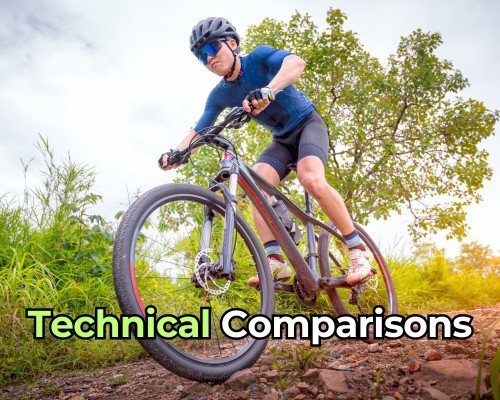
Frame and Suspension Analysis: The Structural Differences
Hardtail Bikes:
- Simplicity and Lightness: The frame of a hardtail is straightforward—no rear shocks, no linkages. It’s just you, the bike, and the trail.
This simplicity not only reduces weight but also decreases potential mechanical issues. It’s akin to driving a classic car with fewer electronic components—it’s easier to maintain and less likely to have issues.
- Direct Power Transfer: With a rigid rear end, every pedal stroke translates directly to motion. It’s like rowing a boat with a stiff oar; you feel the immediate response with each stroke.
Full Suspension Bikes:
- Complexity for Comfort: The rear suspension system includes a shock absorber and linkages, adding layers of complexity.
This system works like a car’s suspension over potholes—it smooths out bumps and keeps your ride stable no matter the terrain.
- Enhanced Traction: The rear wheel moves independently, allowing for constant ground contact. This continuous traction is like having all-wheel drive in a muddy or rocky landscape, providing control where hardtails might slip.
Weight Battle: Comparing the Heft of Hardtail and Full Suspension Bikes
Hardtail Bikes:
- Lighter Framework: By skipping the extra suspension hardware, hardtails stay lean. They’re like backpacks packed only with essentials—lighter and easier to carry uphill.
- Performance Edge: This weight advantage means better acceleration and easier climbing. It’s the difference between wearing running shoes versus hiking boots on a sprint.
Full Suspension Bikes:
- Inherent Heaviness: More components mean more weight. It’s like a backpack with extra gear for rough weather—you’re prepared for anything but at the cost of extra weight.
- Technological Trade-offs: High-end models use materials like carbon fiber to reduce weight, much like sports cars use lighter materials to improve speed despite heavy engines.
Adding Depth with Factual Insights
Hardtail Bikes:
- Normal Weight Extend: Most hardtail mountain bicycles weigh between 11 to 15 kilograms, depending on the construct and materials.
Their lightweight nature makes them perfect for cross-country riding and hustling where speed and dexterity are vital.
Full Suspension Bikes:
- Weight Considerations: Full suspension bikes usually tip the scales from 13 to over 20 kilograms.
However, the latest advancements in bike technology have seen this weight decrease, with high-end models now closer to hardtail weights but with the added benefits of suspension.
Practical Riding Advice:
- Test Both: Considering weight and frame design, it’s wise to test ride both types on a variety of terrains.
What feels heavy in the store might feel resilient on a rocky path, and what seems light might feel insufficient on rugged trails.
- Consider Your Regular Trails: If your local trails are smooth and well-maintained, a hardtail might be just right.
If you’re tackling rough terrains, the initial heaviness of a full suspension could pay off in greater control and less fatigue.
Performance Metrics of Hardtail vs Full Suspension

Climbing Efficiency: Hardtail vs Full Suspension on Uphill Terrains
Hardtail Bikes:
- Direct Power Transfer: The lack of rear suspension means that nearly all the rider’s energy pushes directly into propelling the bike forward.
It’s like rowing in calm water; each stroke moves you efficiently forward without wasted energy.
- Advantage on Smooth Climbs: On steady, non-technical risings, hardtails are lords. They’re lighter and less complex, making them speedier and more responsive. It’s associated with climbing a staircase in shoes rather than boots—faster and less awkward.
Full Suspension Bikes:
- Traction and Control: On rough or uneven climbs, the rear suspension keeps the wheel grounded, providing continuous traction.
This can be compared to having a four-wheel drive in muddy conditions—it keeps you moving steadily forward without slipping.
- Comfort and Endurance: The added suspension helps absorb the relentless bumps on steep, rocky climbs, allowing riders to stay seated and conserve energy. Imagine hiking with versus without trekking poles—the difference in fatigue is significant.
Downhill Dynamics: Safety and Speed in Descents
Hardtail Bikes:
- Technique-Dependent Stability: Descending on a hardtail can be likened to skiing on icy conditions—it demands skill and careful control. Riders need to use their body more actively to manage the bike’s path and absorb impacts.
- Physically Demanding: The rigid rear frame requires riders to be more dynamic with their body to compensate for the lack of rear suspension.
It’s a bit like manual steering in an old car; it gives you direct feedback but demands more muscle.
Full Suspension Bikes:
- Enhanced Stability and Control: Full suspension bikes provide a smoother ride down rugged terrain.
The rear suspension absorbs major impacts, akin to an off-road vehicle equipped with advanced shock absorbers.
- Speed and Confidence: With stability comes the confidence to descend faster and with less effort.
The bike handles the bumps, allowing riders to focus on their line and speed through obstacles more like cruising in a car with good shock absorbers.
Deeper Dive into Performance
Hardtail Bikes:
- Climbing Speed: Research and rider reports indicate that hardtails can be up to 10-15% faster on smooth climbs compared to full-suspension bikes. This efficiency is crucial in racing or long-distance rides where every second counts.
- Skill Building: Riding a hardtail can improve handling skills as it requires precise control and body positioning, especially on descents.
Full Suspension Bikes:
- Versatility on Various Terrains: Full suspension bikes are undoubtedly more versatile, adapting to more diverse and technical terrains smoothly. This adaptability can be crucial for riders who face a variety of conditions.
- Energy Conservation: The shock absorption properties of full suspension bikes mean less fatigue on the rider’s body, allowing for longer rides with less physical strain.
Hardtail vs Full Suspension Mountain Bikes – Suitability and Usage

Trail Suitability: Best Bikes for Different Types of Trails
Hardtail Bikes:
- Optimal for Smooth Trails: Hardtails thrive on well-groomed, flowing trails where obstacles are minimal. They offer speed and efficiency, much like a road bike on city streets.
- Cross-Country and Commuting: These bikes are champions in scenarios that demand endurance and speed over moderate terrain—perfect for cross-country exploits or even daily commutes.
- Climbing Prowess: With a lighter frame and direct power transfer, hardtails excel in climbing, making them ideal for hilly terrains that require constant ascents.
- Limitations on Rough Trails: On rugged, technical trails full of roots and rocks, hardtails may fall short in providing comfort and control, akin to running a trail in minimalist shoes—doable but challenging.
Full Suspension Bikes:
- Masters of Rough Terrain: Where hardtails struggle, full suspension bikes shine. They handle aggressive trails laden with obstacles smoothly, enhancing rider control and comfort.
- Downhill and Technical Riding: These bikes are built for descent dominance—perfect for bike parks or mountain descents where shocks and bumps are frequent.
- Comfort and Traction: The additional suspension provides a cushioned ride, allowing for longer sessions in the saddle with less fatigue, much like an off-road vehicle equipped for rugged landscapes.
Rider Fit: Which Bike Suits Your Body Type and Riding Style?
Beginner Riders:
- Why Choose a Hardtail: For those just starting, hardtails offer a blend of simplicity and affordability. They’re easier to handle and maintain, making them a wise choice for learning the basics without overwhelming tech.
- Skill Development: The straightforward design forces new riders to hone their balance and technique, which can accelerate skill acquisition.
Experienced Riders:
- Full Suspension for Advanced Trails: Seasoned bikers often gravitate towards full suspension bikes for their ability to tackle challenging terrains with ease, providing both comfort and enhanced bike handling capabilities.
- Hardtails for Skill Sharpening: Even veterans may choose a hardtail to push their limits and refine their skills, particularly in precision and control on less forgiving terrains.
Considering Terrain and Conditions:
- Mud and Maintenance: If you’re often riding in wet, muddy conditions, a hardtail could be more practical. Its fewer moving parts mean less maintenance hassle after a muddy ride.
- Tailored to Terrain: Reflect on the trails you frequent. Smooth and speedy? A hardtail might be your ally. Constantly conquering crags and crevices? A full suspension could be your best bet.
As an Amazon Associate, I earn from qualifying purchases, at no additional cost to you. Read Our Affiliate Disclosure.