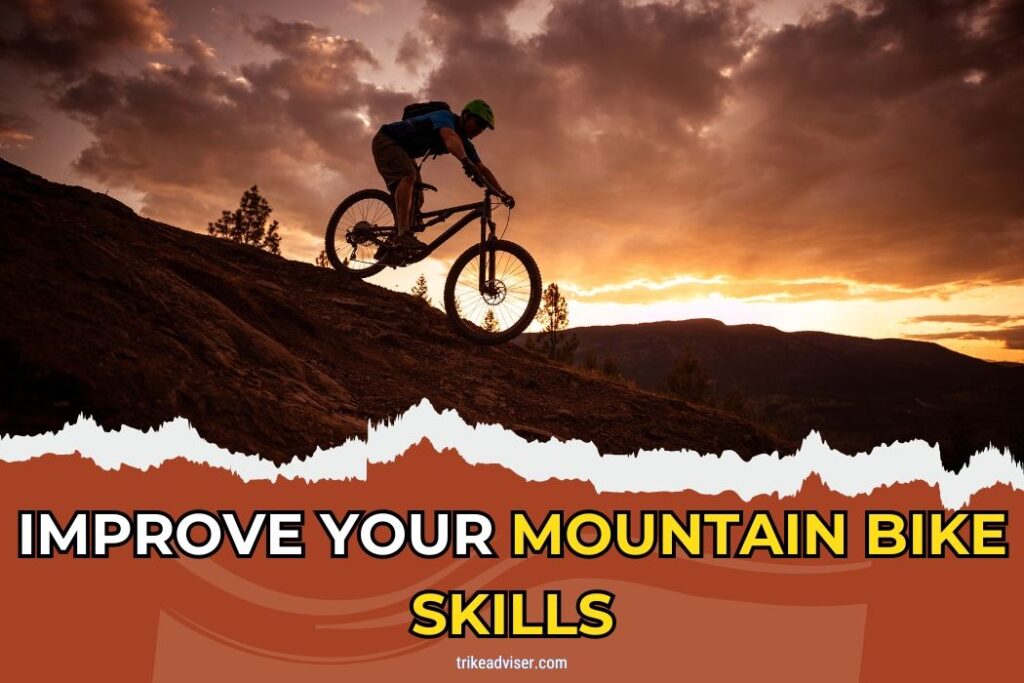

Getting better at mountain biking isn’t just about buying a high-end bike. No, it’s more. Ever felt your heart sink as you faced yet another steep climb? Or does your pulse quicken when a tricky descent appears? You’re not alone.
Many of us feel we’re stuck, not getting better. Is it the fear of falling that holds you back? Or perhaps it’s not knowing how to tackle those tight turns and technical trails.
Improving demands more than muscle; it requires mastering the mind. And yes, the right techniques make a huge difference.
Whether it’s enhancing your balance, boosting your bike handling, or building confidence for those daunting drops, this article is your starting point.
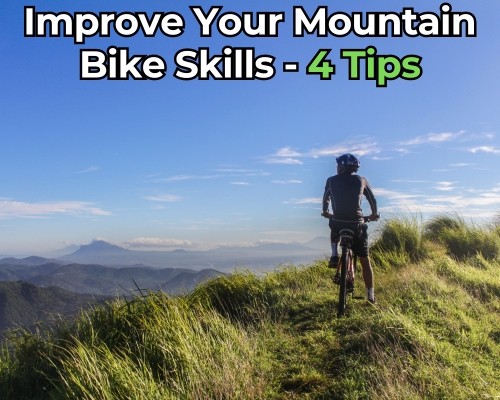
Improve Your Mountain Bike Skills – 4 Tips
Braking Technique
Master the Art of Braking
Proper braking technique is key for safe, effective mountain biking. Here’s what you need to know:
Front Brake: The front brake offers significant stopping power but requires finesse. Start by gently squeezing the lever instead of grabbing it suddenly.
This approach helps maintain control while reducing speed. Seasoned riders know the front brake is their best friend on steep descents—it’s about trust and technique.
Rear Brake: This brake allows for more aggressive use. It’s effective for quick stops by locking the rear wheel, aiding in rapid deceleration.
Combine it with the front brake to enhance your bike’s stopping capabilities. It’s like dancing—the right balance between front and rear braking leads to a perfect rhythm on trails.
Simultaneous Braking: Balance both brakes. Apply firm pressure on the front to scrub speed, while lightly engaging the rear to stabilize your bike.
Imagine controlling a skateboard down a hill; that’s the level of finesse required for effective mountain bike braking.
Bike Handling and Balance
Enhance Your Control
Efficient bike handling and balance are fundamental:
Body Position: Keep dynamic. Think of your bike as an extension of your body—bend your knees, center your weight, and stay agile. This adaptability is crucial for responding to the trial’s demands swiftly.
Pedal Stroke: Cultivate a smooth, circular pedal stroke to save energy and power over obstacles. It’s like stirring a pot—consistent and efficient.
High cadence helps keep the momentum, essential for maintaining speed through challenging sections.
Manuals and Wheelies: These aren’t just for show. They’re practical skills that enhance your ability to navigate over obstacles.
Start small, practice consistently, and soon you’ll find these moves indispensable, especially on trails with frequent obstructions.
Weight Distribution: This is crucial. Shift your weight forward when climbing, back when descending, and side-to-side when cornering to keep the bike balanced. It’s similar to surfing, where your weight determines direction and speed.
Cornering and Line Choice
Navigate Turns Like a Pro
Effective cornering and line selection are crucial for advancing your skills:
Look Ahead: Focus far beyond your front wheel. This helps anticipate turns and choose the best line, similar to driving—always scanning the road ahead.
Lean the Bike: In curves, tilt the bike rather than your body. It’s a nuanced move that improves handling and balance.
Think of it as leaning a motorcycle into a turn—the bike does the work, and your body supports the motion.
Pump and Carve: Use the landscape to gain speed through corners. It’s a dynamic move where you compress and release the bike’s suspension as you carve through the turn, much like how a skier uses the slopes to gain momentum.
Switchbacks: These require finesse. Press the outside pedal down, lean the bike, and focus your gaze through the turn. It’s about precision and planning—like threading a needle with speed.
Advanced Techniques
Elevate Your Riding
Once you master basic skills, push your limits with advanced techniques:
Bunny Hops: Essential for clearing obstacles. This move is about timing and coordination—think of it as a hopscotch leap over a stream.
Drops and Jumps: These skills elevate your trail experience. Start small, build confidence, and respect your limits. Each drop is a mini-adventure—calculated risk and exhilarating reward.
Cornering at Speed: Sharpen your cornering to maintain speed. This advanced skill requires leaning deeper, keeping weight centered, and looking through the turn. It’s akin to racing—every corner is a chance to improve.
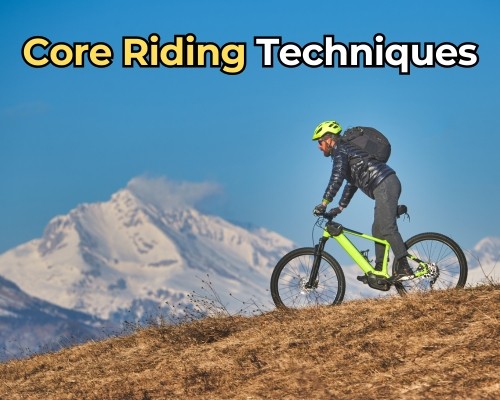
Core Riding Techniques to improve mountain biking
Braking Mastery
- Mastering Your Brakes for Ultimate Control
Effective braking is more art than science, crucial for maintaining control and safety on descents. It can make or break your ride, literally.
- Front Brake Technique: This is your primary tool for reducing speed. Delicately crush the front brake to clean speed without locking up the wheel.
Envision altering the volume on a radio—too much can be overpowering, but fair right lets you appreciate the ride.
- Rear Brake Application: Use the rear brake aggressively but wisely. It complements the front brake, enhancing your stopping power.
Picture this as a dance between two partners—the front and rear brakes must move in sync to perform flawlessly.
- Balanced Braking: Avoid grabbing both brakes simultaneously; this can lead to skidding. Modulate both to maintain traction, akin to handling a delicate piece of machinery.
Seasoned riders use a technique called “feathering” to achieve this balance, applying just enough pressure to slow down without losing grip.
Balance and Bike Handling
Navigating Your Ride with Precision and Agility
Balance in mountain biking is about maintaining control no matter the terrain. It’s what separates good riders from great ones.
- Optimal Body Position: Stay low and loose, ready to react. This position allows you to adapt quickly to changes in the trail. It’s like being in a constant state of readiness, similar to a cat poised to pounce.
- Dynamic Weight Shifting: Shift your weight forward during climbs and back on descents to enhance traction and control.
This technique is crucial, especially in slippery or steep conditions. It’s somewhat like adjusting your footing on a slippery slope—always seeking stability.
- Slow-Speed Drills: Engage in track stands and other balance drills to refine your control. These skills are invaluable for technical sections where precision is crucial.
Think of it as the slow, methodical approach of a chess player, planning several moves.
Pedaling Efficiency
Optimizing Every Stroke for Better Performance
Efficient pedaling is essential for maximizing energy and tackling long rides with less fatigue. It’s about working smarter, not harder.
- Circular Pedal Stroke: Focus on a smooth, circular motion to keep energy consistent. This technique reduces the energy peaks and troughs of your ride, making your effort more sustainable. It’s similar to rowing a boat with steady, powerful strokes to maintain speed.
- Tire and Suspension Setup: Lighter, faster-rolling tires can essentially improve pedaling effectiveness. Alter your suspension to guarantee it complements your riding fashion, not degrades from it.
Legitimate setup is like tuning an instrument—the superior the tuning, the way better the execution.
- Strategic Gear Selection: Choose your gear wisely based on the terrain. This decision can be as strategic as a golfer selecting the right club for a particular shot.
A larger chainring might be your “driver” on open, fast sections, while a smaller one is your “putter” for steep, challenging climbs.
Riding in Different Environments
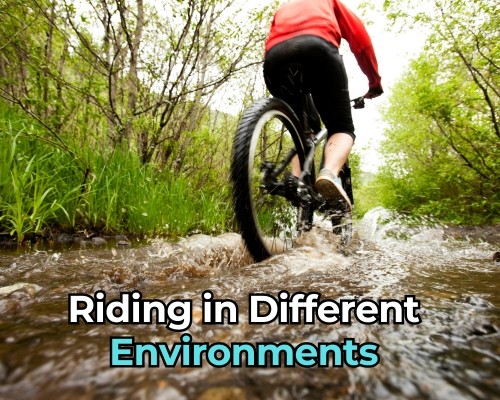
Mastering mountain biking means adapting to an array of trail types and conditions. Each environment demands specific strategies to maintain safety and enhance enjoyment.
Adapting Your Riding Style for Various Trail Types
Versatile Techniques for Diverse Trails
Mountain biking invites you to diverse landscapes, each requiring unique riding styles.
- Singletrack: These narrow paths demand precision. Maintain a low, centered stance with knees and elbows bent for better balance. Keep your eyes focused 15-20 feet ahead to anticipate and react to obstacles effectively.
Picture yourself as a slalom skier, where every turn and stance adjustment is crucial for threading through tightly spaced gates.
- Doubletrack and Fire Roads: These wider paths offer more room but come with their challenges.
Keep an efficient, seated pedaling position to cover the ground quickly. Be mindful of loose surfaces which might affect braking and cornering.
Imagine you’re on a Roman chariot, where maintaining control over rough and open terrains is key to not getting thrown off course.
- Technical Terrain: Confront rocky sections and roots with advanced techniques. Shift your weight back, stay low, and use your legs as shock absorbers.
Skills like bunny hops and wheelies are not just showy—they help you navigate over obstacles. Think of it as a ballet dancer leaping gracefully over hurdles, where elegance meets athleticism.
- Slickrock: Common in desert areas, Slickrock offers unique traction challenges. Keep your weight balanced and center your braking and pedaling smoothly.
Use the natural contours of the rock to aid your movement, like a skateboarder using ramps and curves to build momentum and perform tricks.
Mountain Biking in Wet and Muddy Conditions
Navigating the Slippery Slope
Wet and muddy trails test your adaptability and technique.
- Trail Selection: Avoid saturated, clay-heavy trails prone to damage. Opt for well-drained paths like rocky or decomposed granite trails which handle moisture better.
This is akin to choosing the right type of shoes for a marathon—the wrong choice, and you could end up slipping or stuck.
- Tire Pressure: Lower your tire weight somewhat to extend footing in sloppy conditions, permitting a bigger tire impression on the path.
Think of this as altering the immovability of your running shoes to coordinate the terrain—too difficult, and you slip; as well delicate, and you tire rapidly.
- Braking Adjustments: Brake earlier and more gently to prevent skids. Modulate your braking to maintain control, similar to adjusting your speed on a rain-soaked road in a car—cautious but constant.
- Maintenance Post-Ride: Prepare for more frequent cleaning and maintenance, especially of your drivetrain.
Mud and grime can be as corrosive as rust to metal, eating away at your bike’s efficiency and lifespan if not cleaned properly.
Jumping and Dropping Techniques for Mountain Bikers
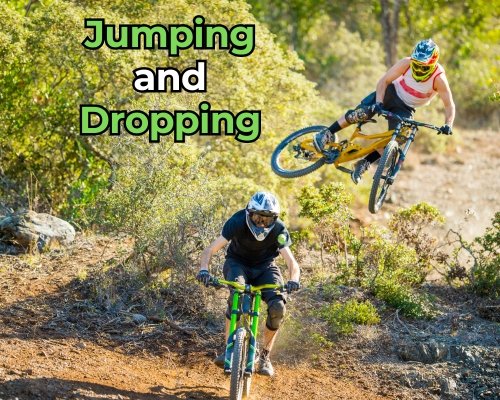
Mastering jumps and drops is essential for advanced mountain biking. Here’s how to take on these exciting challenges safely and effectively.
Jumping Techniques for Mountain Bikers
Approach, Take-Off, and Flight Mastery
- Approach and Take-Off: Begin your jump in a standing position, with knees and elbows slightly bent, keeping your weight centered over the bike.
As you approach the lip, shift your weight from your hands to your feet, aiming to lift the front wheel as you leave the lip.
Compress your body as you hit the lip, then explode upwards by extending your legs and pulling up on the handlebars.
- Body Position in the Air: Once airborne, relax and allow the bike to move underneath you. Keep your head up and your eyes focused on your landing spot.
This control in the air is akin to a gymnast performing a vault—precision in every phase ensures a successful landing.
- Timing and Technique: Proper timing of weight transfer and pull-ups is crucial. Use your feet to initiate the front wheel lift, followed by your arms to lift the rear.
Avoid pulling up with your feet, as this can crunch your body, making it harder to control the bike in the air. Start with smaller jumps to refine your timing before advancing to larger features.
Dropping Techniques
Precision in Descent
- Approach and Body Position: Approach drops with your weight centered and your body low and loose over the bike.
Keep your knees and elbows bent to absorb the impact, and focus your gaze on your landing spot, not the drop itself.
- Braking and Speed Control: Brake before reaching the drop, not on the lip. Carry enough speed to clear the gap but control it to avoid overshooting.
Feather your brakes lightly on the descent to manage your speed, similar to how a parachutist controls their descent.
- Landing and Rollout: On landing, bend your legs and keep your weight centered to absorb the shock. Avoid locking your arms as this can lead to losing control. Continue pedaling to maintain control and speed through the rollout. Think of landing a plane: smooth, controlled, with ongoing adjustments as needed.
As an Amazon Associate, I earn from qualifying purchases, at no additional cost to you. Read Our Affiliate Disclosure.